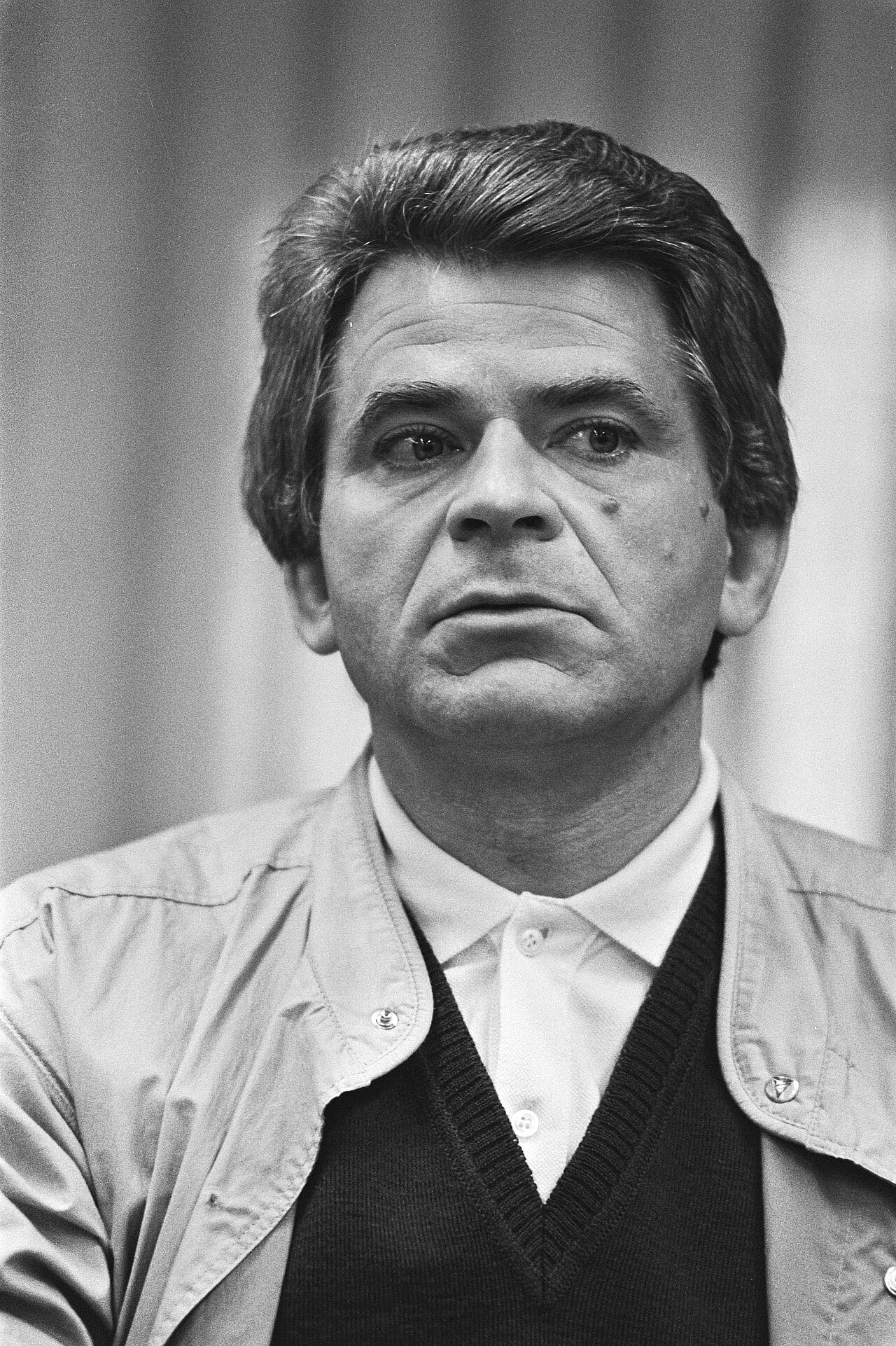
Photo: Rob Bogaerts for Anefo / Wikimedia Commons (CC0)
On 24 November 2026 two young players, Gukesh Dommaraju and Javokhir Sindarov, sit down in Geneva to play for the world title. Before they start, it is worth meeting an earlier champion. Boris Spassky won the title in 1969, lost it in 1972, and in 1960 played a famous attacking game. He gave away a whole rook, and 23 moves later his opponent was lost.
A boy from Leningrad
Spassky was born on 30 January 1937 in Leningrad, the city now called Saint Petersburg. At the age of 10 he beat Mikhail Botvinnik, the world champion at the time, in a simultaneous exhibition, where one master plays many boards at once. He trained with Vladimir Zak and spent several hours a day on chess.
He climbed fast. At 15 he was the youngest player ever to become a Soviet master. At 16 he played abroad for the first time, in Bucharest in 1953, and beat Vasily Smyslov. In 1955 he won the World Junior Championship in Antwerp, and at 18 he became a grandmaster. At 19 he played in the Candidates Tournament in Amsterdam, the event that picks the challenger for the world title.
Then the road got bumpy. He failed to qualify from the next two Interzonal tournaments, which are steps on the way to the Candidates, and it took him years to come back. In 1966 he lost a title match to Tigran Petrosian, whose story you can read in our piece on Tigran Petrosian. Three years later he played Petrosian again and won, becoming the tenth world champion.
Did You Know?
The 1963 spy film From Russia with Love opens with a chess game. The villain wins with the moves Nxe5+, Kh7 and Qe4+. Those are the last moves of the game in this story.
The game: Spassky vs. Bronstein, Leningrad 1960
Boris Spassky 1-0 David Bronstein, USSR Championship, Leningrad, 1960.
Spassky had White and chose the King's Gambit, a famously daring opening. After White offers a pawn to open lines for the pieces. His opponent David Bronstein knew this opening well, because he played it too. Bronstein took the pawn and then hit back in the centre: .
White has more space and his pieces point at Black's king. White's knight jumped to e4, and Black grabbed a pawn, . Then left a black pawn deep in White's camp. attacked the bishop on d6, which stepped back, . Spassky brought his bishop to and his queen to , and Black pushed his pawn to .
After 14...e2, White to move. The black pawn attacks the rook on f1. White's bishop on c2 and queen on d3 line up on the diagonal that ends at h7, but White's own knight on e4 stands in their way.
Look at the diagonal from c2 to h7. The bishop is at the back, the queen is in front of it, and a white knight blocks both. Black's pawn on e2 threatens the rook on f1. White could simply take the pawn with 15.Qxe2, and our engine, Stockfish 17.1 searching to depth 20, rated White about four fifths of a pawn better here. Spassky played something wilder: .
After 15.Nd6, Black to move. The knight left e4 and opened the diagonal. It attacks the rook on e8 and the pawn on f7, and Black's bishop and c-pawn can capture it.
The knight moved with a threat, because it attacks the rook on e8. It also opened the diagonal, so the queen and bishop now stare at h7. Black can take the knight with the bishop or the pawn. If 15...Bxd6, then 16.Qh7+ is check, and the king has only one move, 16...Kf8. The bishop on c2 guards the queen, so the king cannot take it. Stockfish at depth 18 calls that line close to equal, so the sacrifice was a gamble. After our depth 20 run has Black ahead by about four fifths of a pawn.
Bronstein chose . It stops the check on h7, because the knight on f8 guards that square. But stopping one threat opened the door to another: . After the engine has White ahead by about one and three quarters of a pawn. The knight on f7 now attacks the queen on d8.
Black took the rook, . This is the moment to count. White has given up a whole rook for a single extra pawn. But Black's king has almost no cover, and the white pieces are already there.
After 17.Rxf1, Black to move. White is a rook down for a pawn, but the knight on f7 attacks the queen on d8 and the bishop and queen still aim at the black king.
put a bishop on the long diagonal, but nothing protected it, and took it. The game went . The bishop on b3 now supports the knight on f7 along the diagonal from b3 to f7.
Now stop and look at the position before the last move. White to play. Can you find the check?
After 22...Kh7, White to move. Black's king stands on the long diagonal, and the white queen is one move from it.
The answer is . The queen checks along the diagonal from e4 to h7, and Black has three legal replies. After 23...Kh8 the engine finds a forced mate in four, and after 23...Ng6 a mate in three. The third reply, 23...g6, loses a piece to 24.Rxf8, and White is then more than five pawns ahead. The engine runs for these last lines used depths of 16 to 18. The game ended there with a win for White.
What Spassky Can Teach You
What Boris Spassky Can Teach You
- Move the blocker with a threat. The knight on e4 hid the queen and bishop. 15.Nd6 uncovered them and attacked a rook at the same moment.
- Count what you give and what you get. White gave a rook for a pawn, and the reward was an open king, not material.
- Look for the long diagonal toward the king. The bishop and queen on c2 and d3 are a battery, two pieces lined up on one line.
- A defensive move can open a new hole. 15...Nf8 guarded h7, and then 16.Nxf7 came next.
- Do not block with a piece that nothing protects. The bishop on f5 was lost for nothing.
Spassky, World Champion
Spassky held the world title from 1969 to 1972. In 1972 he lost it in Reykjavik to Bobby Fischer, in his only title defence. He died in Moscow on 27 February 2025, at the age of 88. The title he once held is the one Gukesh and Sindarov will play for in Geneva.
Update: Fischer beat Spassky in game 6 of the 1972 match.