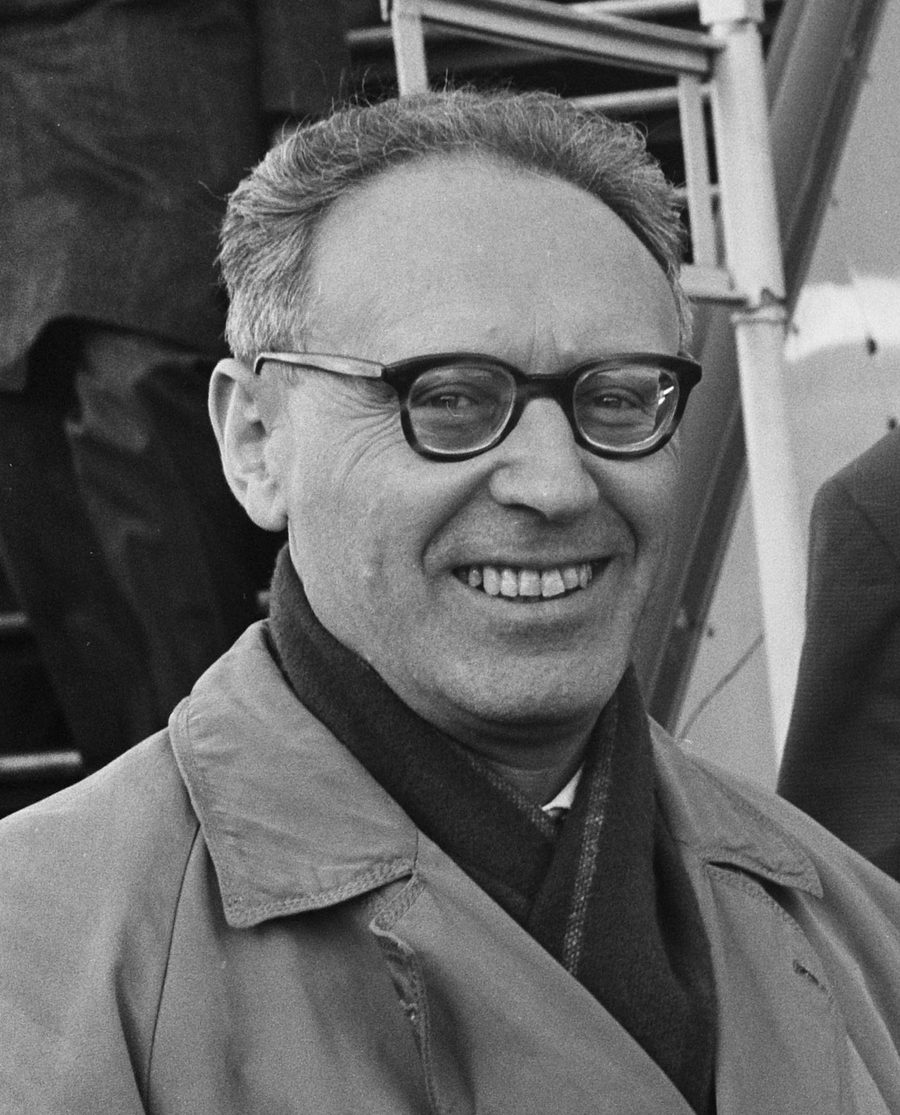
Photo: Harry Pot / Anefo (Dutch National Archives) / Wikimedia Commons (CC BY-SA 3.0 NL)
In November 1925, in the Russian city of Leningrad, the world chess champion sat down to play 30 people at the same time. José Raúl Capablanca walked from board to board, making one move at each. This kind of show is called a simultaneous exhibition. Capablanca won 18 games, drew eight and lost four.
One of the four players who beat him was a schoolboy of 14 named Mikhail Botvinnik. Thirteen years later Botvinnik beat Capablanca again, in a game that people still study today. Here is his story, that game, and what it can teach you.
A Boy from the Edge of Russia
Mikhail Botvinnik was born on 17 August 1911 in Kuokkala, a village on the coast near Saint Petersburg. Today it is part of the city. His father was a dental technician and his mother was a dentist. He grew up in the city, which was then called Petrograd and later Leningrad.
He started chess in the autumn of 1923, when he was 12. In 1924 he won the championship of his school, and soon he played in tournaments in the city.
In 1927 he played in the final of the USSR Championship, the national championship of the Soviet Union, and tied for fifth and sixth place. That result made him a master. But chess was not his only plan. He studied electrical engineering at the Leningrad Polytechnic Institute and became an electrical engineer.
The Scientist of Chess
In 1931 he won the USSR Championship for the first time, at the age of 20. He won it six times in all, in 1931, 1933, 1939, 1944, 1945 and 1952.
Botvinnik worked at chess like an engineer. He studied his openings at home, so that he reached the middlegame with an edge, and he kept a strict routine of rest and training. In 1935 he shared first place in a strong tournament in Moscow. In 1936 he shared first place in Nottingham, England, with Capablanca.
Did You Know?
Botvinnik stayed an engineer all his life. After he stopped playing, he spent years working on a computer program that could play chess. He also ran a chess school, and some of its pupils became world champions.
The AVRO Tournament of 1938
In November 1938 the eight strongest players in the world met in the Netherlands for the AVRO tournament, named after the Dutch radio company that paid for it. Each player met every other player twice. Paul Keres and Reuben Fine finished first, tied on 8½ points. You can read about Keres in our story on Paul Keres. Botvinnik was third with 7½ out of 14, ahead of Capablanca, who scored 6.
Botvinnik beat both the reigning world champion, Alexander Alekhine, and the former champion, Capablanca. The game against Capablanca was played in round 11. Capablanca had been world champion from 1921 to 1927. You can read about him in our story on José Raúl Capablanca.
The Game: Botvinnik vs. Capablanca, AVRO 1938
Mikhail Botvinnik 1-0 José Raúl Capablanca
Botvinnik had White. The game began with , an opening called the Nimzo-Indian Defense. Black pins the knight on c3 with the bishop on b4. Then came .
After 6.bxc3, Black to move. White has two pawns on the c-file, on c3 and c4. Pawns like this are called doubled pawns, and they are usually a weakness. But White now owns two bishops.
Capablanca had traded his bishop for a knight and left White with doubled pawns. That sounds good for Black. After the doubled pawns were gone, because the c4 pawn took on d5. The play went on with .
After 14...c4, White to move. The black pawn on c4 attacks the white queen. White's bishop on b2 is stuck behind its own pawn on c3.
At first sight White's play looks poor. The queen had to run away, and the bishop on b2 was blocked by its own pawn. Our engine, Stockfish 17.1 searching to depth 18, thought Black was slightly better here, by about half a pawn.
But White had a plan. Count the pawns. On the right side of the board, from the d-file to the h-file, White has five pawns and Black has four. A group of pawns that is bigger than the enemy group is called a majority. White's plan was to push the majority forward and make a passed pawn. A passed pawn is a pawn that no enemy pawn can block or capture on its way to the last rank.
Black had a majority too, three pawns against two on the other side of the board. But Black's pawns were far from White's king, and White's pawns were close to Black's king.
The game went on with . Capablanca sent a knight to the edge of the board. The knight on a5 and then b3 was far from the king, and a knight on the edge does little. Our engine had White about one pawn ahead after , and about a pawn and a half ahead after .
After 18...Nb3, White to move. Black's knight is on the edge of the board, far from its king. White's pawns on e3 and f3 are ready to roll forward.
Now the pawns rolled. . Black's pawn jumped two squares and landed next to the white pawn on e5. White can take such a pawn as if it had moved only one square. This special capture is called en passant, which is French for "in passing." Botvinnik played .
Then . White's pawn is now on e6, and no black pawn can block it or capture it.
After 27.fxe6, Black to move. White's pawn on e6 is passed. It needs two steps to reach the last rank. White has 20 points of material and Black has 21.
Black played . Our engine says that 29...h6 was Black's best, and White would still be better, by about one and a half pawns. Capablanca played . His queen now stood in front of the pawn, like a goalkeeper.
Stop and look at this position. White to move. How can White move the black queen away from e7?
After 29...Qe7, White to move. The black queen blocks the passed pawn. Find the move that makes her leave. Hint: look at the long diagonal from a3 to e7.
The answer is . The bishop attacks the queen. If the queen stays, she is lost. If she runs, the pawn goes forward. Our engine, searching to depth 20, calls the best move, and says White is more than four pawns ahead after it, whatever Black plays. Capablanca took the bishop with .
Now Botvinnik gave up a second piece. !
After 31.Nh5+, Black to move. The knight on h5 attacks the king on g7 and the knight on f6. Black's knight cannot take it, because the white queen on e5 pins it against the king. Black has five legal moves.
The knight on h5 gives check and attacks the knight on f6 at the same time. That is a fork. The black knight cannot capture the white knight, because it is pinned: if it moved, the white queen would capture the king. Black had five legal moves, and our engine sees White far ahead after every one. Two of them, 31...Kf8 and 31...Kh8, lose to checkmate by force.
Capablanca took the knight, . Then attacked the king and the knight on f6 at once. After White had won the knight back, and White was only four points behind, 14 to 18. But the pawn was ready: .
After 34.e7, Black to move. White is four points behind, 14 to 18, but the pawn on e7 is one step from becoming a queen on e8, and Black's king is boxed in on the edge of the board.
Black's queen gave check again and again: . The white king walked up the board, even took a pawn, and found a safe square on h5.
After 41.Kh5, Black to move. White threatens 42.Qf8, checkmate. The pawn on e7 guards f8, and the black king has no escape.
Black still has two checks, 41...Qe5+ and 41...Qh4+, but both lose the queen to a capture. White threatens Qf8, and the pawn on e7 guards that square, so it would be checkmate. Our engine looked at every black move. All of them but one lose to a forced checkmate. The one exception is 41...Qxe7, which loses the queen to 42.Qxe7. Capablanca resigned.
What Botvinnik Can Teach You
What Mikhail Botvinnik Can Teach You
- Count the pawns on each side of the board. A majority can become a passed pawn.
- A passed pawn needs a blocker. Look for a way to chase the blocker away, as 30.Ba3 did.
- A knight on the edge of the board does little. Capablanca's knight on b3 was far from the fight.
- Before you sacrifice a piece, check that you can win it back. 31.Nh5+ was followed at once by 32.Qg5+.
- Prepare. Botvinnik studied his openings and his plans at home, so he knew where his pawns were going.
Botvinnik, World Champion
In 1948 five players met in The Hague and Moscow to choose a new world champion, after the death of Alexander Alekhine. Botvinnik scored 14 points out of 20, three points clear of the rest, and became the sixth world champion and the first from the Soviet Union. You can read about Alekhine in our story on Alexander Alekhine.
He lost the title and won it back twice. In 1957 Vasily Smyslov beat him, and in 1958 Botvinnik won the return match. In 1960 the young attacker Mikhail Tal beat him, 12½ to 8½. Botvinnik was 48 and Tal was 23. You can study one of those games in our story on Mikhail Tal. In 1961 Botvinnik won the return match 13-8, at the age of 49. Writers at the time said he won by taking away Tal's chances for sudden attacks.
He held the title in three separate periods, from 1948 to 1957, from 1958 to 1960 and from 1961 to 1963. In 1963 Tigran Petrosian beat him, and he did not play for the title again. He played his last games around 1970.
Botvinnik also taught. His chess school trained Anatoly Karpov, Garry Kasparov and Vladimir Kramnik, who all became world champions. You can read about two of them in our stories on Anatoly Karpov and Garry Kasparov.
A Habit to Practice
When you have a pawn that can run, look at the one piece that stands in its way. Ask: can I chase it, trade it or trick it? Botvinnik offered a bishop, and the queen had to leave.
Try it with the puzzle position above. Set it up on a board, play , and see what every black reply leaves behind. Then play through the whole game slowly, covering the next move and guessing it.
Update: Botvinnik lost his title to a defender in 1963. Read how it happened in Tigran Petrosian Gives Up Both Rooks to Beat Spassky.